
A High-Altitude Pseudo-Satellite (HAPS), also known as a high-altitude platform station, is an autonomous, long-endurance aircraft designed to operate in the stratosphere, typically 18 to 20 kilometres above the Earth. Positioned between conventional aircraft and satellites, HAPS delivers services similar to those provided by traditional artificial satellites, while operating much closer to the ground.
How Does HAPS Work?
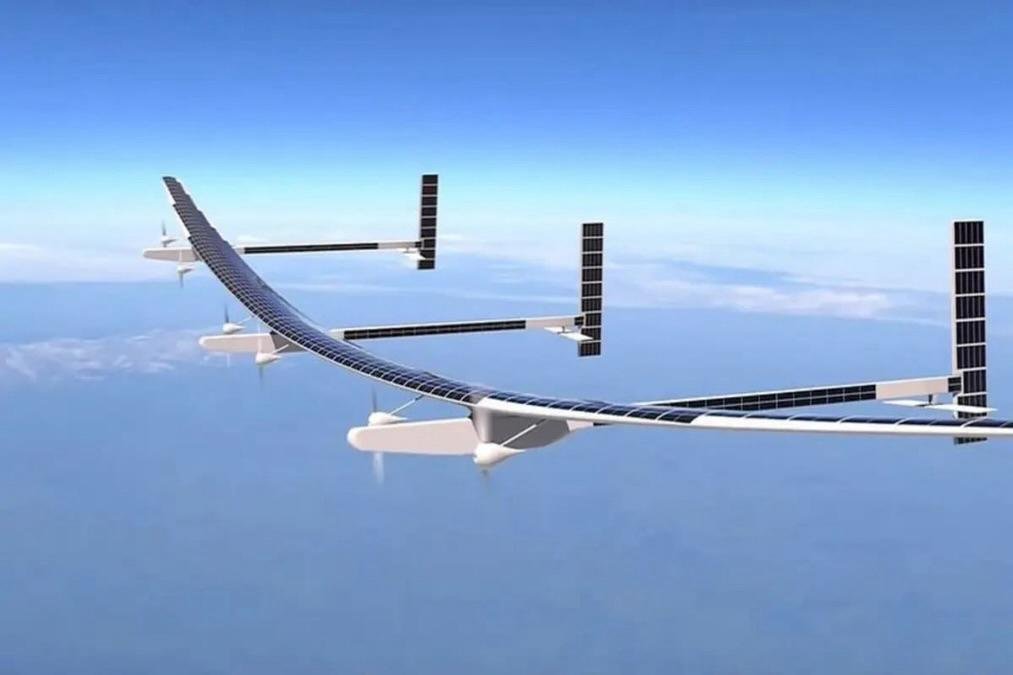
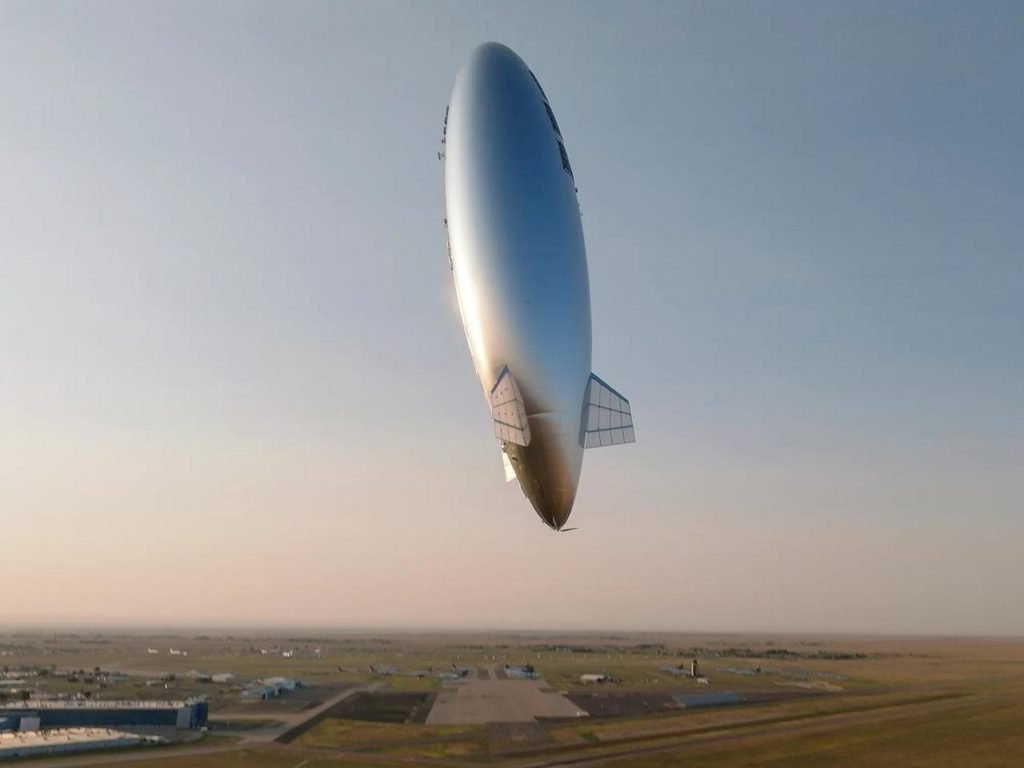
- Platform Types: HAPS platforms come in two forms: heavier-than-air systems, such as solar-powered fixed-wing aircraft, and lighter-than-air systems, including airships and balloons. Both offer ways to maintain a presence high above the Earth’s surface.
- Power Source: Solar energy is at the heart of HAPS operations. Solar panels harness sunlight during the day, while high-density onboard batteries store energy to sustain continuous flight through the night, enabling extended operations.
- Altitude Advantage: Operating at approximately 20 kilometres above the Earth, HAPS flies well above commercial air traffic and most severe weather systems. At the same time, its proximity to the ground enables high-resolution imaging and low-latency communication, offering a valuable combination of coverage and responsiveness.
Key Applications of HAPS
- Border Surveillance and Military Intelligence, Surveillance and Reconnaissance (ISR): Equipped with optical and infrared sensors, HAPS enables real-time tracking of movements across land and maritime borders, supporting surveillance and monitoring operations.
- Telecommunications: HAPS can extend 4G and 5G connectivity, as well as internet access, to remote and underserved regions, helping bridge communication gaps where conventional infrastructure may be limited.
- Disaster Response and Environmental Monitoring: During emergencies, HAPS can serve as a temporary “cell tower in the sky,” helping restore connectivity when it is needed most. It can also support environmental and land monitoring, providing valuable insights from high above the Earth’s surface.
Comparison Between Drones, HAPS and Satellites on the basis of Burn Rate and Regulatory terms:
| Dimension | Tactical Drones | Stratospheric HAPS | Orbital Satellites (LEO Constellations) |
|---|---|---|---|
| Capital Expenditure (Initial Asset Cost) | Low to Moderate: $5,000 (Commercial) to $15M+ (Military MALE assets). | Moderate: $5M to $15M per platform (airframe, high-spec solar/nanowire stack). | Astronomical: $500K–$5M per LEO unit, multiplied by thousands of units for a global grid. |
| Deployment / Launch Cost | Negligible: Ground crew or basic runway launch; no third-party infrastructure. | Low: Conventional runway launch or specialized ground winch launcher. | Extreme: $50M–$100M+ per heavy rocket launch (spreading cost across multiple rideshare units). |
| Operational Expenditure & Asset Depreciation | High per Flight Hour: Heavy logistics, fuel/battery replacement, ground operators. | Ultra-Low: Autonomous flight profiles; zero fuel costs; primary OpEx is data management. | Moderate to High: Ground station networks, continuous orbital maintenance, orbital decay replacement. |
| Payload Lifespan & ROI | Dynamic Maintenance: Return-to-base allows immediate, low-cost payload upgrades and modular swaps. | High Depreciation Shield: Recalled every 3–6 months for battery maintenance and immediate sensor upgrades. | Sunk Capital: Irreversible hardware choices; sensors degrade over 5–7 years with no repair path. |
| Airspace Sovereignty | Strict National Control: Regulated by local civil aviation authorities (e.g., DGCA in India, FAA in US). | Hybrid Gray Zone: Operates within national sovereign airspace borders, requiring strict overflight permits. | Open Horizon: Space law dictates no national sovereignty above the Kármán line (100 km). |
| Regulatory Framework | Established Visual/BVLOS: Regulated under strict local drone rules and low-altitude flight paths. | Evolving Global Frameworks: Managed by ICAO and ITU (WRC) under High-Altitude Platform Station rules. | Congested International Slots: Governed by the ITU for orbital slot allocations and spectrum rights. |
| Spectrum Licensing | Local / Short-Range: Standard ISM bands (2.4/5.8 GHz) or localized licensed military frequencies. | Shared Fixed-Satellite Service: Operates on assigned stratospheric IMT/5G bands (e.g., 28/38 GHz). | Global Priority Allocation: Highly contested Ku, Ka, and V-band allocations with complex cross-border filing. |
Comparison Between Drones, HAPS and Satellites on the basis of Performance Parameters:
| Performance Parameter | Tactical/Commercial Drones | Stratospheric HAPS | Orbital Satellites (LEO to GEO) |
|---|---|---|---|
| Operating Altitude | 100 m to 5 km (Troposphere) | 17 km to 25 km (Stratosphere) | 500 km to 36,000 km (Space) |
| Flight Endurance | 30 mins to 30 hours (battery/fuel limited) | Weeks to Months (continuous solar-battery cycles) | 5 to 15+ Years (limited by fuel/orbit decay) |
| Coverage Radius | Local: 5 km to 50 km | Regional: 200 km to 500 km | Global/Continental: Thousands of km |
| Signal Latency | Instantaneous: < 5 milliseconds | Ultra-Low: < 10 milliseconds | Variable: 20–40 ms (LEO) to 600 ms (GEO) |
| Station Keeping | Dynamic Loitering: Subject to localized weather and wind. | Quasi-Stationary: Stays fixed over a region via geostationary flight. | Orbital Pass/Fixed: Fast flyovers (LEO) or true geostationary lock (GEO). |
| Weather Dependency | High: Grounded by rain, heavy wind, and low clouds. | Negligible: Operates far above weather systems and jet streams. | None: Immune to atmospheric weather (sensors bypass clouds via radar). |
| Deployment & Lifecycle | Instantaneous: Launched manually or from basic runways; cheap repairs. | Rapid-Response: Launched from runways; payload is fully retrievable. | Long-Term Planning: High cost; rocket launch required; no physical maintenance. |
Challenges in Designing High-Altitude Pseudo-Satellites (HAPS)
Despite their significant potential, High-Altitude Pseudo-Satellites (HAPS) face substantial engineering challenges. Operating in the stratosphere demands exceptional aerodynamic efficiency, lightweight construction, and precise energy management. Two of the most critical hurdles are maintaining propulsion performance in extremely thin air and sustaining battery operation in freezing temperatures.
1. The Aerodynamic Challenge: Propulsion in Air with Just 7% of Sea-Level Density
Flying at an altitude of 20 kilometres presents a fundamental aerodynamic challenge: the air density is only about 7% of that at sea level. In this extremely thin atmosphere, generating sufficient lift and thrust becomes considerably more demanding, requiring a radical rethink of conventional propulsion design.
- HAPS aircraft typically cruise at relatively low speeds of 80–100 km/h. Combined with the low air density. Under these conditions, airflow over wings and propeller blades becomes more difficult to manage.
- The propeller must perform efficiently during launch and climb at lower altitudes while remaining optimised for cruising at 20 kilometres. In the thin stratospheric air, generating sufficient thrust requires the propeller to accelerate more air through higher rotational speeds or use large-diameter blades with specialised, lightweight airfoils.
How engineers address the challenge: High-fidelity Computational Fluid Dynamics (CFD) simulations help engineers optimise propeller geometry for these demanding conditions. Specialised, wide-diameter carbon-composite blades are designed to minimise flexing under load while balancing the substantial changes in torque experienced between the dense lower atmosphere and the thin stratosphere.
2. The Thermal and Weight Dilemma: Batteries at −85°C
For a HAPS platform targeting 60 days of continuous flight, energy management is one of the most critical engineering challenges. The aircraft must function as a self-sustaining solar-powered system, capturing energy through ultra-thin photovoltaic strips during daylight hours, powering its electric motors, and storing sufficient surplus energy to remain airborne throughout the night.
- The Weight Penalty: In the subscale technology demonstrator, the airframe weighed just 8 kg, yet the final take-off mass approached 23 kg. This means the battery pack accounted for nearly two-thirds of the aircraft’s total weight. Scaling up introduces an even greater challenge: for a full-scale model weighing 150 kg to remain viable, the system requires an extreme battery specific energy density of at least 500 Wh/kg. Achieving this threshold is crucial to carrying enough energy without compromising the aircraft’s weight budget.
- Freezing Stratospheric Temperatures: At high altitudes, temperatures can fall to between −50°C and −85°C, creating a harsh operating environment for onboard energy systems. Standard commercial lithium batteries can suffer severe capacity losses and impaired operation under such extreme cold, making reliable energy delivery throughout the night a major concern.
- The Thermal Management Tax: Keeping batteries within a safe operating temperature range requires thermal insulation and active temperature-control systems. While essential for reliable battery performance, these systems consume additional energy. This creates a direct trade-off: the more energy used to keep batteries and electronics warm, the less remains available to power the aircraft through the night, reducing its endurance.
Ultimately, HAPS endurance depends on balancing three competing demands: minimising structural weight, maximising energy storage, and maintaining battery performance in extreme cold. Overcoming these challenges is essential to achieving sustained, long-duration stratospheric flight.
Global HAPS Development Landscape: Leading Companies and Emerging Innovators
The global High-Altitude Pseudo-Satellite (HAPS) industry brings together established defence contractors, specialised aerospace innovators, and telecommunications giants, all working to unlock the potential of sustained operations in the stratosphere. Their efforts span applications ranging from military surveillance and high-resolution Earth observation to next-generation connectivity and regional communications networks.
HAPS development is broadly divided into two major design architectures: fixed-wing solar-powered aircraft and lighter-than-air (LTA) platforms, including airships and balloons. Each approach offers distinct advantages in endurance, payload capacity, and operational flexibility.
1. Fixed-Wing Solar Aircraft Developers
- Aalto HAPS / Airbus Defence and Space (Europe): Airbus is a leading name in solar-powered stratospheric aviation through its Zephyr platform. Its subsidiary, Aalto HAPS, focuses on commercialising stratospheric capabilities, with particular emphasis on 5G connectivity and high-resolution Earth observation.
- AeroVironment (United States): A major player in unmanned aircraft systems, AeroVironment co-developed the Sunglider, a large solar-powered HAPS platform designed to carry substantial broadband communications payloads.
- SoftBank Corp. / HAPSMobile (Japan): SoftBank plays a significant role in the HAPS ecosystem as both a developer and a strategic investor. Through HAPSMobile, it partnered with AeroVironment to fund and test the Sunglider, with the goal of establishing commercial stratospheric telecommunications networks.
- BAE Systems / Prismatic Ltd. (United Kingdom): Following its acquisition of Prismatic, BAE Systems advanced the development of PHASA-35, a solar-electric HAPS platform. The aircraft has completed successful stratospheric test flights exceeding 66,000 feet, with applications focused on military intelligence, surveillance and reconnaissance (ISR), as well as commercial data connectivity.
- Sceye Inc. (United States): Sceye specialises in long-endurance stratospheric platforms built around advanced materials and aerospace technologies. Its partnership with SoftBank aims to support the introduction of pre-commercial HAPS communications services.
- Stratospheric Platforms Ltd. (United Kingdom): Supported by major telecommunications interests, including Deutsche Telekom, the company develops high-endurance aircraft designed to extend 5G coverage across large geographic areas with limited or no conventional connectivity.
- Kea Aerospace (New Zealand): An emerging innovator in solar-powered stratospheric aviation, Kea Aerospace is developing its Kea Atmos series. Its development programme includes the Kea Atmos Mk2, a fixed-wing HAPS platform with a 30-metre wingspan designed for regional imaging missions lasting months.
- Aurora Flight Sciences / The Boeing Company (United States): Operating as a Boeing subsidiary, Aurora Flight Sciences applies its expertise in autonomous flight and advanced aerospace engineering to the development of solar-powered, ultra-long-endurance aircraft and other advanced atmospheric platforms.
2. Lighter-Than-Air (LTA) and Airship Developers
- Thales Alenia Space (France/Italy): Thales Alenia Space is developing Stratobus, an autonomous stratospheric airship designed for persistent operations at high altitude. The company also plays a leading role in the European Commission’s EuroHAPS demonstration project, which evaluates rigid and flexible LTA platforms for intelligence gathering, electronic warfare, and communications mesh networking.
- Aerostar LLC / Raven Industries (United States): Aerostar specialises in lighter-than-air systems, particularly high-altitude balloon platforms. Its solutions support persistent surveillance missions and scientific applications involving the tracking and collection of sensor data at high altitudes.
- Mira Aerospace (UAE/Global): Mira Aerospace focuses on operational stratospheric platforms and has expanded its presence in the Indian defence market through partnerships aimed at proposing high-capacity, solar-powered HAPS solutions.
3. India’s Domestic HAPS Development Landscape
India is building its own HAPS ecosystem, driven by growing defence requirements and the need for persistent, high-altitude surveillance capabilities. Against the backdrop of a potential requirement for more than 50–70 stratospheric surveillance platforms, domestic research institutions and private aerospace companies are advancing indigenous technologies and competing for emerging opportunities.
- CSIR–National Aerospace Laboratories (NAL): The government-backed research organisation is developing a fixed-wing, solar-powered HAPS platform with a 33-metre wingspan, contributing to India’s indigenous capabilities in stratospheric aviation.
- NewSpace Research and Technologies (NSRT): NSRT is advancing private-sector HAPS development under the Indian Air Force’s iDEX Open Challenge. The company has demonstrated sustained solar-powered flight, marking progress towards long-endurance indigenous platforms.
- VEDA Aeronautics: VEDA Aeronautics is pursuing opportunities associated with the Indian Air Force’s proposed HAPS fleet requirement. In partnership with Mira Aerospace, it is working on fixed-wing solar-powered platforms as well as the SAVITR airship-based HAPS concept.
The Road Ahead
The global HAPS ecosystem reflects a convergence of aerospace engineering, defence technology, telecommunications, and advanced materials science. While fixed-wing solar aircraft offer a pathway to lightweight, long-endurance flight, LTA platforms provide an alternative approach to sustained stratospheric presence.